Carlos Sierra’s Collection That Turns Plantain Into Textile Language
Carlos Sierra’s story doesn’t begin only among fabrics. Before arriving at design, there was music, professional dance, theater, movement, rhythm, and a sensibility shaped by different artistic languages. That mix laid the groundwork for what would come later, while he was working at a Venezuelan textile company: the discovery of fashion as a living, almost three-dimensional expression, capable of uniting body, memory, and technique.
Trained in Venezuela and with international workshops along the way, Sierra understood early on that creating from his country also meant learning to persevere. Making designer fashion out of Venezuela, committing to ready-to-wear with its own identity, and managing every input amid logistical constraints was no small feat. It was a school. What does a designer do when the context seems to say no? In his case, he turns the obstacle into method, distance into discipline, and difficulty into one more reason to sharpen his eye.
His evolution led him to move past an idea of fashion tied solely to aesthetic fantasy or dressing for special occasions. Today he thinks about functional collections for a contemporary woman seeking sophistication in everyday life, but also about proposals for the modern man and for children. His label doesn’t try to please everyone; it prefers to speak clearly to those who understand the value of a piece with origin, soul, craftsmanship, culture, and staying power.
His mother was his first great influence. From her he inherited a sense of everyday elegance: a love of detail, neatness, and that way of taking care of one’s appearance as part of an identity. Then came the visual arts, music, dance, and theater — fields that still run through his creative process today. In his designs, nature doesn’t appear as a mere visual reference; it becomes cuts, structures, textures, and movement.
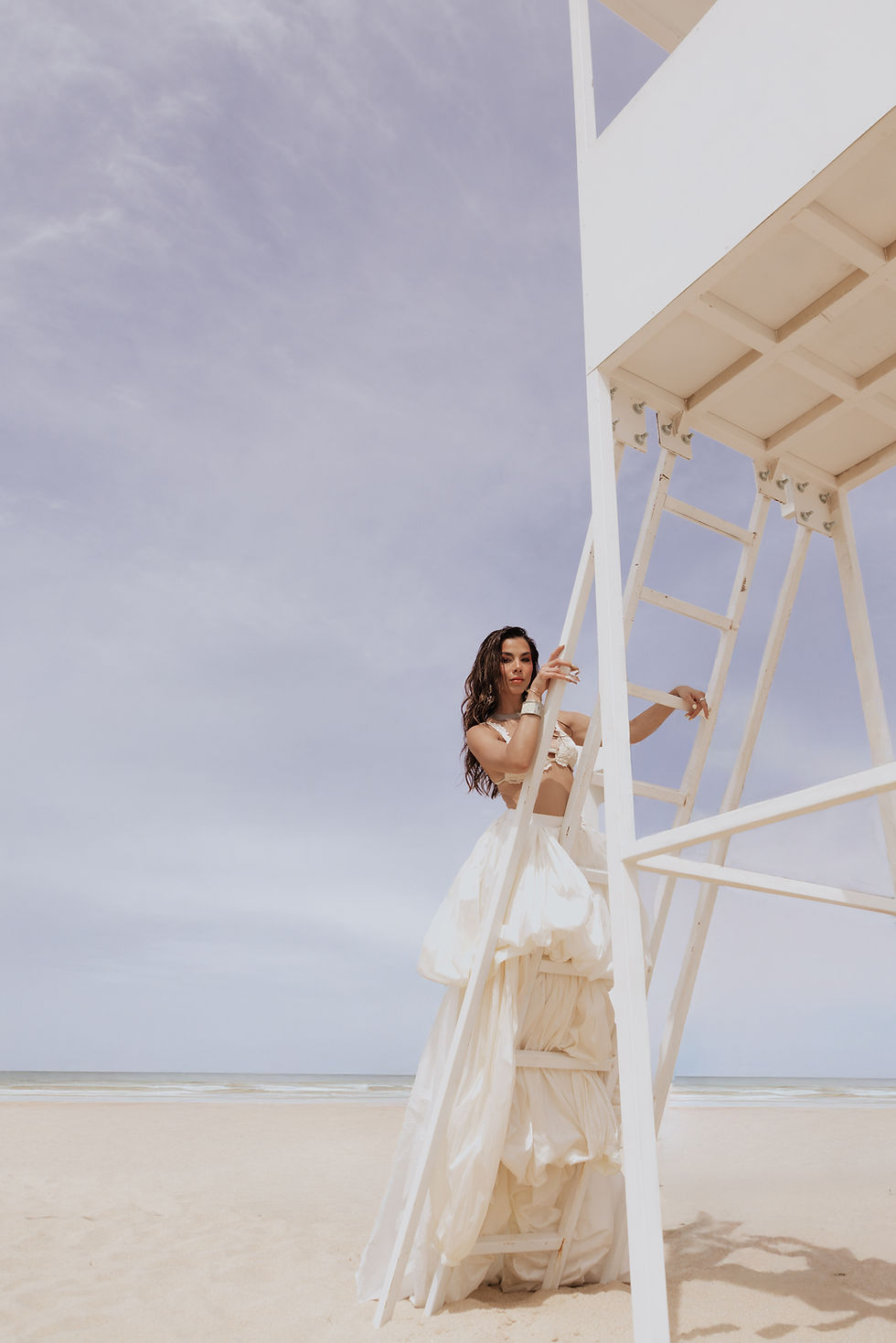
His Mangú 2028 collection sums up that search. Inspired by the Dominican green plantain, the proposal brings together gastronomy, Caribbean culture, and designer fashion. It also pays tribute to the resilience of Latina women, drawing inspiration from the leadership of Albania Rosario, president of FDLA. Can an everyday food become a reflection on identity, strength, and the future? For Carlos Sierra, yes.
The collection features more than 40 tailored and designed pieces for men and women, made with fibers extracted from plantain bark, organic pigments, Peruvian linen, Italian cotton, and eco-friendly, chemical-free processes. The silhouettes engage with different geographies: a Latin line that highlights the waist, a more comfortable and relaxed American reading, and a European vision with sharp shoulders and fluid trousers.
At its core, his fashion speaks of memory. Carlos Sierra wants whoever wears one of his pieces to feel reconnected to their own story, as if the garment weren’t just covering the body, but helping them remember where they came from. That’s where his difference lies: designing for the future without letting go of the root.


Comments